


Introduction to Music Theory
Music theory serves as the foundation for understanding the intricate elements that comprise musical compositions. At its core, music theory is a comprehensive framework of rules, conventions, and guidelines that enable musicians and composers to grasp how music operates. This system not only facilitates the creation of music but also enhances the appreciation of various musical styles and genres. By delving into music theory, learners embark on a journey that demystifies the sounds they cherish and creates a pathway to deeper musical insight.
The significance of music theory cannot be overstated; it equips musicians with the tools necessary to analyze, create, and perform music effectively. For example, understanding the basics of scales and chord progressions allows a songwriter to build more compelling melodies and harmonies. As musicians become familiar with concepts such as rhythm, dynamics, and form through music theory, they often find that their performance skills improve, leading to a more expressive delivery of their craft.
Moreover, learning music theory fosters better musical communication among musicians. Whether in ensemble settings or informal jam sessions, a common language based on theoretical principles allows musicians to collaborate seamlessly. This shared understanding aids in improvisation and arrangement, as musicians can communicate their ideas clearly and concisely, promoting a more cohesive sound.
In conclusion, the study of music theory is an invaluable endeavor for anyone aspiring to create or appreciate music more fully. By grasping the essential concepts of music theory, individuals will not only enhance their songwriting and performance abilities but also enrich their overall musical experiences. Embracing this knowledge paves the way for a deeper connection to music and its creative processes.
Understanding Musical Notation
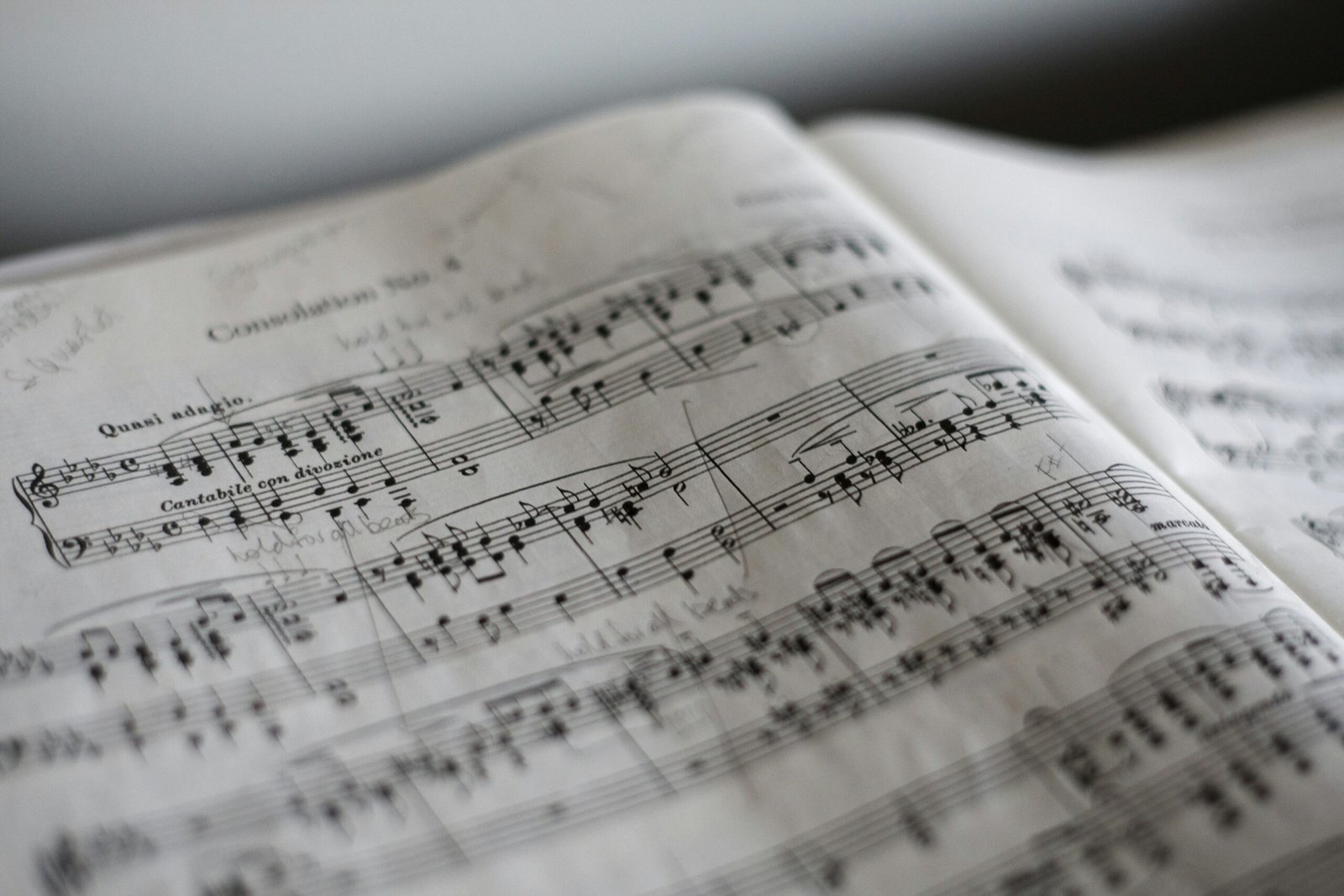
Musical notation is the system used to visually represent music through symbols and marks on a staff. At its core, the staff is a set of five horizontal lines. Notes are placed on or between these lines to indicate specific pitches. Understanding how to read the staff is fundamental for any beginner seeking to grasp the intricacies of music theory.
Within the staff, clefs play a crucial role in determining the pitch range of the notes. The most common clefs are the treble clef and the bass clef. The treble clef, often associated with higher-pitched instruments such as the flute or violin, encircles the second line of the staff, which represents the note G. Conversely, the bass clef, commonly used for lower-pitched instruments like the cello or bass guitar, marks the fourth line of the staff, corresponding to the note F. By identifying these clefs, musicians quickly understand which notes to play on their respective instruments.
Notes are fundamental symbols in musical notation, indicating sounds of varying lengths. Whole notes, half notes, quarter notes, and eighth notes differ in duration, thereby creating the rhythm within a piece of music. In addition to notes, rests signify periods of silence, each with its own duration corresponding to their note counterparts. The proper placement of these rests within the notation is essential for maintaining the correct timing and flow of the music.
Reading sheet music is essential for musicians as it provides a universal language that transcends cultural barriers. This proficiency enables musicians to collaborate effectively, share compositions, and interpret pieces authentically. Mastering the basics of musical notation not only enhances individual playing skills but also significantly enriches one’s overall understanding of music theory. Ultimately, this foundational knowledge serves as a stepping stone for further exploration into the vast world of music.
Scales and Intervals: The Building Blocks of Music
Musical scales are fundamental components of music theory that serve as the backbone for melodies and harmonies. At their core, a scale is a series of notes arranged in ascending or descending order. The two most commonly used scales are the major and minor scales. The major scale is generally associated with a happy and bright sound, while the minor scale conveys a more somber and melancholic tone. Understanding these scales is essential for any aspiring musician as they set the foundation for musical composition and improvisation.
The major scale follows a specific pattern of whole and half steps: Whole-Whole-Half-Whole-Whole-Whole-Half. For example, in the C major scale, the notes are C, D, E, F, G, A, and B, leading back to C. In contrast, the natural minor scale employs a different pattern: Whole-Half-Whole-Whole-Half-Whole-Whole. The A natural minor scale, which consists of A, B, C, D, E, F, and G, illustrates this structure effectively. Mastering both scales equips musicians with the tools to create diverse melodies, enhancing their musicality.
Additionally, intervals play a vital role in understanding the relationship between different notes. An interval is defined as the distance between two pitches and can be classified as various types, such as major, minor, perfect, augmented, and diminished. For example, the distance between C and E represents a major third interval, while the space between C and E flat signifies a minor third. Intervals not only impact the harmonic richness of chords but also shape the emotional character of melodies. Comprehending both scales and intervals allows musicians to express themselves more creatively, fostering a deeper connection to the music they create.
Chords and Harmony: Creating Sound Relationships
Chords play a fundamental role in music theory, serving as the building blocks for the harmony that underpins most musical compositions. A chord is formed when multiple notes are played simultaneously, typically derived from a scale. The most common type of chord is the triad, which consists of three notes: the root, the third, and the fifth. For instance, in a C major chord, the notes C, E, and G are combined to create a harmonious sound. Understanding how chords are constructed from scales is essential for any beginner looking to explore music theory.
The concept of harmony encompasses the relationships between different chords and the emotional responses they evoke. These relationships can be categorized as consonance and dissonance. Consonance refers to chord combinations that sound stable and pleasant, while dissonance introduces tension and a sense of movement. This interplay between consonance and dissonance is crucial for creating expressive music. Composers utilize these contrasting elements to propel musical narratives, capturing listeners’ attention through dynamic progressions.
Common chord progressions, such as the I-IV-V-I and ii-V-I sequences, form the backbone of many popular songs across various genres. By understanding these patterns, beginners can begin to recognize how different progressions elicit specific feelings. For example, the I-IV-V-I progression is often perceived as uplifting and joyful, while the ii-V-I progression may create a more resolved and satisfying effect in jazz and classical contexts. Exploring the emotional impact of chords and harmony allows musicians to convey their intended messages more effectively, enhancing the overall listening experience.
Rhythm and Meter: The Pulse of Music
Rhythm and meter are fundamental components that organize music in time, acting as the heartbeat that gives a piece its structure and flow. Rhythm refers to the arrangement of sounds and silences in a specific duration, creating patterns that are pleasing to the ear. It encompasses not just the timing of notes, but their relative lengths and accents, which contribute to the overall feel of the music. The concept of meter, on the other hand, provides a framework that groups beats into regular patterns, helping musicians understand where they are in a piece of music.
The most basic unit of rhythm is the beat, which acts as the steady pulse upon which music is built. Beats can vary in speed, referred to as tempo, which is typically measured in beats per minute (BPM). A faster tempo can create a sense of excitement and urgency, while a slower tempo often conveys a more relaxed or somber mood. Understanding tempo is crucial for musicians as it impacts how music is performed and perceived by listeners.
Time signatures are vital for establishing meter in written music. They denote how many beats are in each measure and what note value gets one beat. Common time signatures include 4/4, 3/4, and 6/8, each contributing to different styles and genres. For example, a 4/4 time signature, also known as “common time,” is widely used in pop and rock music, while a 3/4 time signature, or “waltz time”, creates a flowing, dance-like quality.
Rhythmic patterns are essential in creating distinct musical phrases and motifs. They allow composers and performers to inject variety into their work, making it engaging. By employing techniques such as syncopation—where the emphasis is on a weak beat or offbeat—musicians can create tension and interest that resonates with listeners. Together, rhythm and meter form the lifeblood of music, shaping its emotional and structural dynamics.
Dynamics and Articulation: Expressing Emotion in Music
Music is not merely a collection of notes arranged in a sequence; it is an expressive art form that conveys emotion and meaning. Two fundamental components that contribute significantly to this expressive quality are dynamics and articulation. Dynamics refer to the variations in loudness and softness of musical sounds, while articulation pertains to the manner in which individual notes are executed. Both elements play a crucial role in shaping the overall interpretation of a piece of music.
Dynamics can range from very soft (pianissimo, pp) to very loud (fortissimo, ff), and they allow performers to communicate feelings ranging from tranquility to intensity. The use of crescendo (gradually increasing volume) and decrescendo (gradually decreasing volume) can heighten emotional tension or provide a release within a musical narrative. Understanding and applying dynamics can enhance a listener’s emotional experience and create a more engaging performance. When composers indicate dynamic markings in their scores, they offer musicians guidance on how to express the intended emotions through contrasts in volume.
Articulation, on the other hand, pertains to how notes are articulated or played. Techniques such as staccato (short and detached notes) and legato (smoothly connected notes) can dramatically influence the character of a musical passage. Proper articulation can add nuances to a performance, allowing the musician to ebb and flow with the emotional content of the music. For instance, employing a staccato touch can create a light and playful atmosphere, while a legato approach can evoke a sense of warmth and continuity.
In essence, dynamics and articulation are essential tools in a musician’s arsenal, enabling them to express a wide range of emotions and enhancing the listener’s overall experience. Mastering these concepts is vital for any musician aiming to interpret music more profoundly and authentically.
Form and Structure: The Blueprint of Music
Music, much like literature or architecture, possesses a distinctive form and structure that serves as the backbone of its creation. The organization of musical phrases and sections dictates how a piece is experienced by the listener, allowing for coherence, development, and artistic expression. Understanding these forms equips aspiring musicians and listeners alike with the tools necessary to appreciate and interpret music more deeply.
One of the most prevalent forms in contemporary music is the verse-chorus structure. This format typically alternates between verses, which contain varying lyrics, and a recurring chorus that conveys the central theme of the song. This structure creates familiarity and emotional resonance, making it a favorite in popular music, as it hooks the audience while allowing for narrative development. The repetition of the chorus, striking melody, and singable lyrics not only enhances memorability but also reinforces the song’s message.
Another significant form is the sonata, often encountered in classical music. A standard sonata form consists of three main sections: exposition, development, and recapitulation. The exposition introduces themes, the development explores and varies them, and the recapitulation brings back the original themes, often with notable modifications. This format promotes thematic transformation and showcases the composer’s ingenuity.
The rondo form, characterized by a recurring theme interspersed with contrasting sections, serves as a delightful departure from monotony. It typically follows the scheme ABACADA, where “A” is the refrain and “B,” “C,” and “D” represent different ideas. The rondo’s playful nature allows composers to showcase creativity and variation in their works. By understanding these forms and structures, beginners gain crucial insights into how music is crafted and the artistic intentions behind each composition, fostering a deeper appreciation for the art form.
The Role of Music Theory in Composition and Improvisation
Music theory serves as the foundational framework that underpins both composition and improvisation. It provides musicians with a vocabulary that enables them to communicate ideas effectively. This understanding allows composers to create original pieces by manipulating elements such as harmony, melody, rhythm, and structure, ultimately resulting in a cohesive work that resonates with audiences.
In the realm of composition, knowledge of music theory equips composers with the tools necessary to explore and experiment with different musical forms. For example, an understanding of scales and chords facilitates the creation of harmonically rich progressions, while knowledge of counterpoint offers insight into how to combine multiple melodies. By applying theoretical principles, composers can evoke specific emotions or atmospheres and create music that is both innovative and appealing. Furthermore, theory aids in the organization of ideas, guiding musicians through the process of developing motifs and themes.
Improvisation, on the other hand, benefits greatly from a solid grounding in music theory. A musician who understands the underlying structures and conventions of music is better equipped to respond spontaneously during a performance. Theoretical concepts such as key signatures, chord progressions, and rhythmic patterns provide a broad palette from which improvisers can draw. For instance, being aware of the modes and scales associated with specific chords allows improvisers to create melodies that harmonically complement the underlying music. This connection between theory and practical application fosters creativity and enhances performance quality.
Ultimately, music theory serves as a bridge between the technical and artistic aspects of music-making. Through its application in both composition and improvisation, musicians gain a deeper understanding of their craft, enabling them to express their unique musical voices more effectively.
Resources for Further Learning in Music Theory
To enhance your understanding of music theory and develop your skills, a variety of resources are available. These include books, online courses, websites, and software tools tailored to beginners and those looking to deepen their theoretical knowledge.
Several books stand out for those just starting their journey into music theory. “The Complete Musician” by Steven G. Laitz integrates music, theory, and ear training, making it ideal for comprehensive learning. Another excellent resource is “Tonal Harmony” by Stefan Kostka and Dorothy Payne, which provides a thorough approach to the core concepts of Western music. For a lighter but effective introduction, “Music Theory for Dummies” by Michael Pilhofer and Holly Day breaks down complex ideas into easily understandable sections, perfect for self-study.
In addition to traditional books, online courses offer an interactive way to learn music theory. Websites like Coursera and Udemy feature numerous courses taught by experienced instructors. One particularly popular choice is the course “Music Theory Fundamentals” available on Coursera. Additionally, platforms such as Khan Academy provide free resources, videos, and exercises that cater to various learning styles.
For those who prefer learning through digital tools, music theory software can be quite beneficial. Applications like MuseScore offer notation software that helps beginners practice and apply what they’ve learned. Tools like EarMaster can strengthen your aural skills, which are integral to mastering music theory. Moreover, websites like MusicTheory.net provide exercises and tutorials that are concise and easy to follow.
Engaging with these resources will not only solidify your understanding of fundamental concepts in music theory but also encourage you to explore and enjoy the vast world of music. Making use of various learning methods—whether reading a book, taking a course, or using software—will ensure a rounded educational experience. Happy learning!